
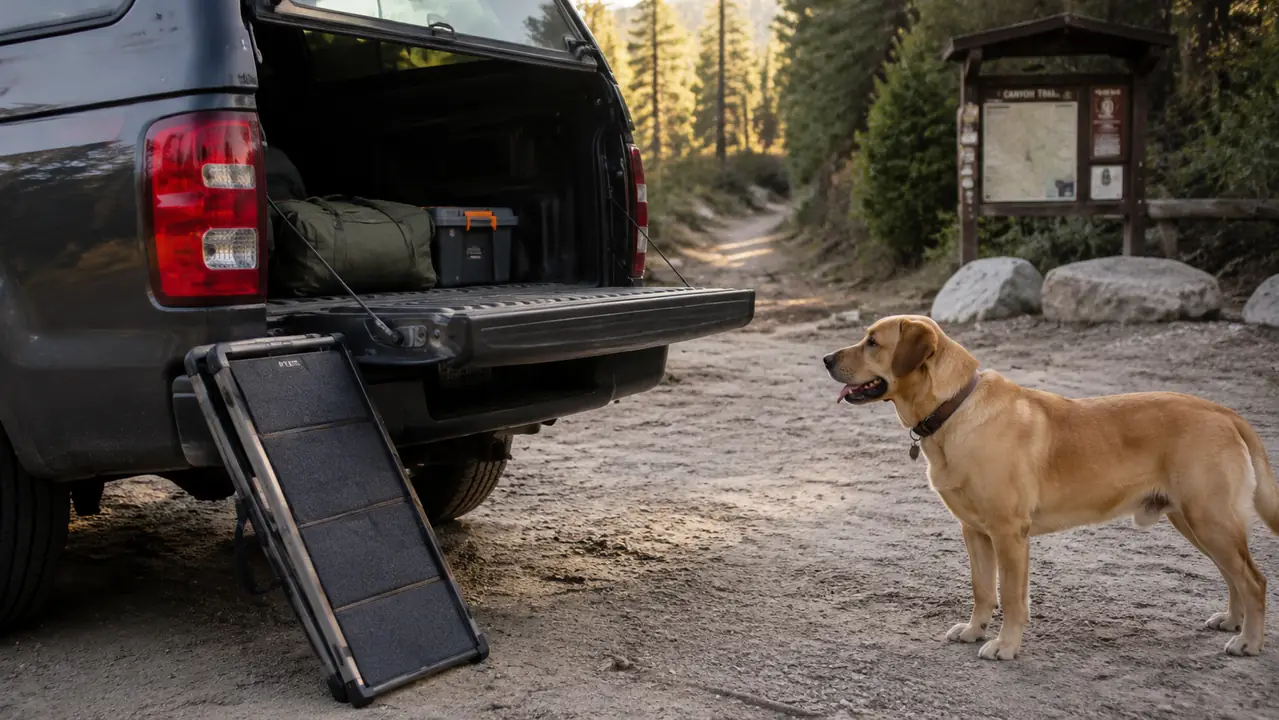
If you've ever tried to coax a 74-pound dog into the bed of a truck, you know the drill. Boone, my nine-year-old yellow Labrador mix, has been riding with me for years, but cold mornings make his hips stiff. Lifting him into the crew cab of my 2019 Ram 1500 got harder every season. A folding ramp changes that. The Pawaboo 74-inch folding dog ramp is the one that lives in my truck now, and after using it through a full year of trips, I can walk you through exactly how to use one safely.
You don't need a ramp if you have a puppy that can jump. But for a senior dog, a dog with joint issues, or just a big dog that's hesitant, ramps make the difference between a smooth exit and a morning of pulling on a leash. The trick is doing it right, because a ramp used wrong is a trip hazard for you and your dog.
Stop lifting your dog into the truck
A folding ramp turns a 74-pound lift into a gentle walk for your dog and a lot less strain on your back. Check today's price on Amazon.
Amazon Check Today's Price on Amazon →Why a Folding Ramp Works
A ramp spreads the climb over a longer distance, which means your dog isn't jumping from the ground to the seat or cargo area. That matters more as dogs age. Boone used to launch himself into the truck when he was young, but now he takes the ramp slowly and deliberately. It's easier on his hips and it's easier on me, because I'm not bending down to lift him. A folding ramp also stores flat, so it fits in the truck without taking up the whole bed.
The Pawaboo ramp is 74 inches long and 20 inches wide, which gives Boone a gentle slope and enough room to place his feet naturally. The folding design means the two halves lock together with a simple mechanism, and the non-slip surface keeps his paws planted even when it's wet outside. I've used shorter ramps that felt steep and narrow, and they made me nervous. This one doesn't.
Step 1: Park on level ground before you unfold anything
The right surface matters more than you think. If the truck is on even a slight slope, the ramp sits at an angle that makes your dog nervous, and you end up chasing both the ramp and the dog. I park on the flattest part of the driveway or the shoulder, put the truck in park, and set the parking brake. That way the ramp doesn't shift when Boone steps on it.
Give yourself room to work. Open the tailgate or the rear door all the way. If you're using the back seat, position the truck so you can stand beside the open door without crouching in a ditch. The goal is a straight, stable path from the ground to the cargo area. I also keep the dog on a leash during setup so he doesn't wander into the road.
If the ground is soft, like grass or gravel, put a rubber mat under the bottom of the ramp. That keeps the feet from sinking and the ramp from sliding. On pavement, the rubber feet usually do the job on their own, but I still tap the ramp once before I let Boone put weight on it. A ramp that moves under your dog is a ramp that will be ignored.
Step 2: Open the ramp and lock the hinges
Most folding ramps, including the Pawaboo, have a locking mechanism that clicks when the panels are flat. Don't skip this. A half-unfolded ramp can fold under your dog's weight. I always give the ramp a quick shake before I put weight on it. If it rattles, I figure out why before Boone gets near it.
Set the ramp on the bumper or tailgate so the hooks or ridges at the top catch the edge. Pawaboo's ramp has a lip that grabs the bumper, so it stays put while the dog walks up. When it's seated right, you shouldn't be able to slide it sideways with a nudge. If it moves, adjust the angle slightly and try again.
Opening and folding the ramp takes about ten seconds, but do it carefully. The hinges can pinch if you're in a hurry. I open it with the hinge side facing up, then flip it over so the non-slip side is on top. It's a small habit that keeps fingers out of the way.
Step 3: Get the angle gentle, not steep
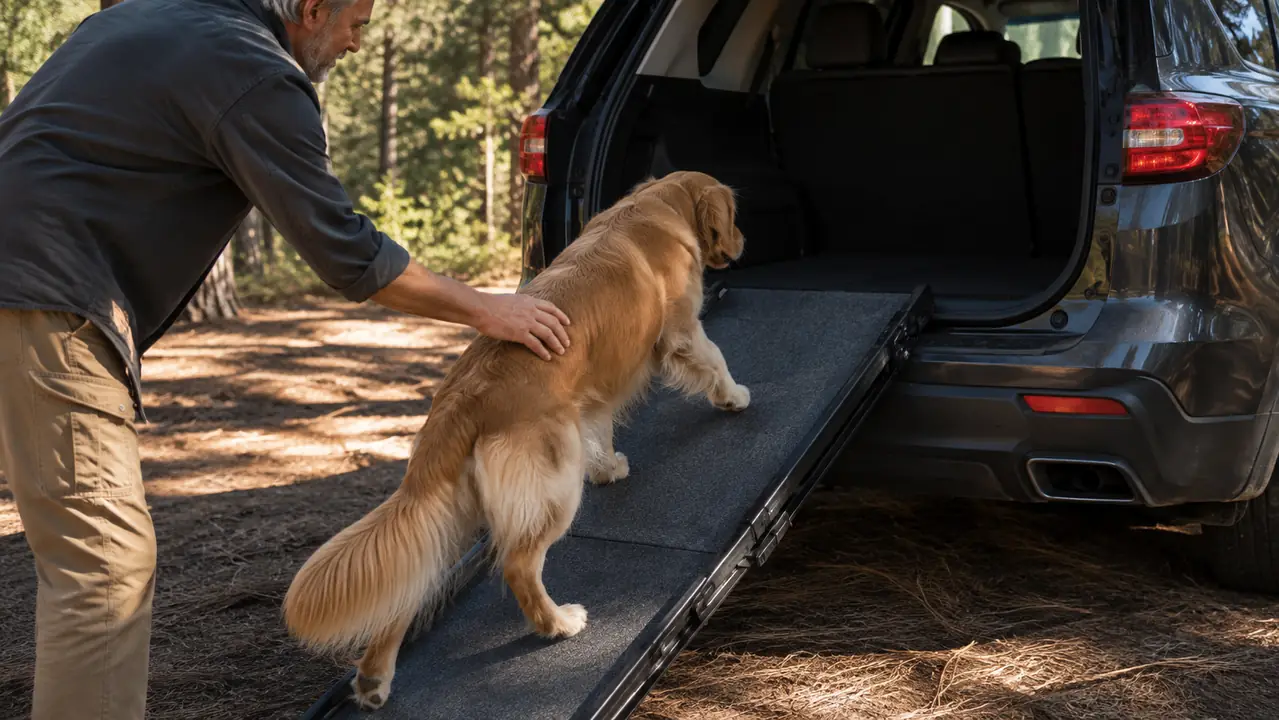
The longer the ramp, the lower the angle. Pawaboo's 74-inch version spreads the climb out, which is why I picked it over shorter ramps. Boone's hips do better with a gentler slope, and he actually walks up it instead of hesitating. If the ramp feels steep, move the truck or adjust the ramp position so it's more gradual.
Watch the edges. A ramp that's too narrow for your dog's stance makes him hug the middle. The 20-inch width gives Boone room to place his paws without crowding. You don't need a huge adjustment, just enough that he doesn't feel like he's on a balance beam.
You can also lower the effective height by parking next to a curb or a low spot in the driveway. I've found that a few inches of ground elevation makes a big difference in how confident Boone looks climbing. The goal is a slope that lets him walk, not scramble.
And never try to use a ramp when the truck is at an angle to the slope. It's a recipe for a twisted paw. Take the extra minute to reposition.
Step 4: Use treats and a spotter the first few tries
The first time Boone saw the ramp, he looked at me like I'd grown a second head. So I put a few treats at the top and one at the bottom, and I had my neighbor spot him from behind. A spotter isn't just for nervous dogs; it's for safety. If a dog slips halfway up, someone on the other side can catch or steady him.
Never pull a dog up a ramp by the collar. You can hurt the neck and make the dog more scared. Instead, walk beside the ramp, keep the leash loose, and let him find his own pace. Some dogs do better if they watch another dog go first, but for a solo dog, food works.
Once he's up, reward him in the truck. I keep a small dish of kibble or a treat pouch in the door panel. Boone now walks up the ramp on his own for a cookie. It took about three sessions before he stopped waiting for me to lift him. Patience here pays off.
Step 5: Secure the dog before you drive
The ramp gets you into the truck, but it doesn't keep you safe once you're moving. Boone rides in the back seat with a crash-tested harness clipped to the seat belt, and I have a seat cover over the cloth seats. He's not loose in the cab, and neither should your dog be, no matter how mellow he seems.
Make sure the ramp is stowed before you close the door. Pawaboo's ramp folds in half and has a carry handle, so it fits behind the seat or in the bed. A loose ramp in the cab turns into a missile in a hard stop. I have a habit of stowing it before I even put my own seat belt on.
Check the ramp for wear. The rubber feet on the bottom take the most abuse. After a year, the rubber on my Pawaboo is still intact, but I check it every time I wash the truck. If a foot wore down, the ramp would slide on the pavement.
What Else Helps
A ramp is one piece of the setup. A seat cover keeps the cloth from getting muddy, and a harness with a seat belt tether does more for safety than any ramp. I also carry a collapsible water bowl and a first aid kit. The combination means Boone and I can cover 600 miles in a day without either of us being banged up.
If your dog is small enough to lift easily, a ramp might feel like extra gear. But even a 40-pound dog gets heavy when you're loading and unloading five times a day on a trip. I've seen plenty of folks with small dogs use ramps because it's easier on their own backs.
The ramp did more for Boone's hips than any joint supplement I've tried.
When a Ramp Isn't the Answer
A ramp only works if your dog is willing to walk on it. Some dogs never take to the idea, and forcing it creates more fear than it solves. For those dogs, a set of pet stairs or a lift might be a better fit. And if your truck sits so high that even a long ramp makes a steep slope, measure the height before you buy. The ground-to-bumper height matters more than the ramp's advertised length.
I also wouldn't use a ramp for a dog with a serious spinal injury or a recent surgery without asking your vet first. The goal is to reduce strain, not introduce a new risk. In most cases, a gradual ramp beats a jump, but your dog's specific health issues come first.
Common Mistakes to Avoid
The first mistake is putting the ramp on too steep an angle because you're in a hurry. I've done it, and Boone just stopped halfway up and looked back at me like I'd failed him. Take the time to get the slope right, and you'll save more of it later.
The second mistake is leaving the ramp loose in the cab or in the bed without securing it. I've had a ramp slide around a turn and hit Boone's seat, which scared us both. Always stow it flat and, if it has a strap or a latch, use it.
Third, don't assume your dog will know what a ramp is. A lot of people unfold it and expect the dog to just walk up. That's not how it works. It's a new thing, and it deserves the same patience as anything else you teach your dog.
I also see people buy a ramp that's too short. A ramp that's too short is steep, and a steep ramp is dangerous. Measure the height from the ground to the loading surface before you buy, not after.
Tailgate vs. Back Seat
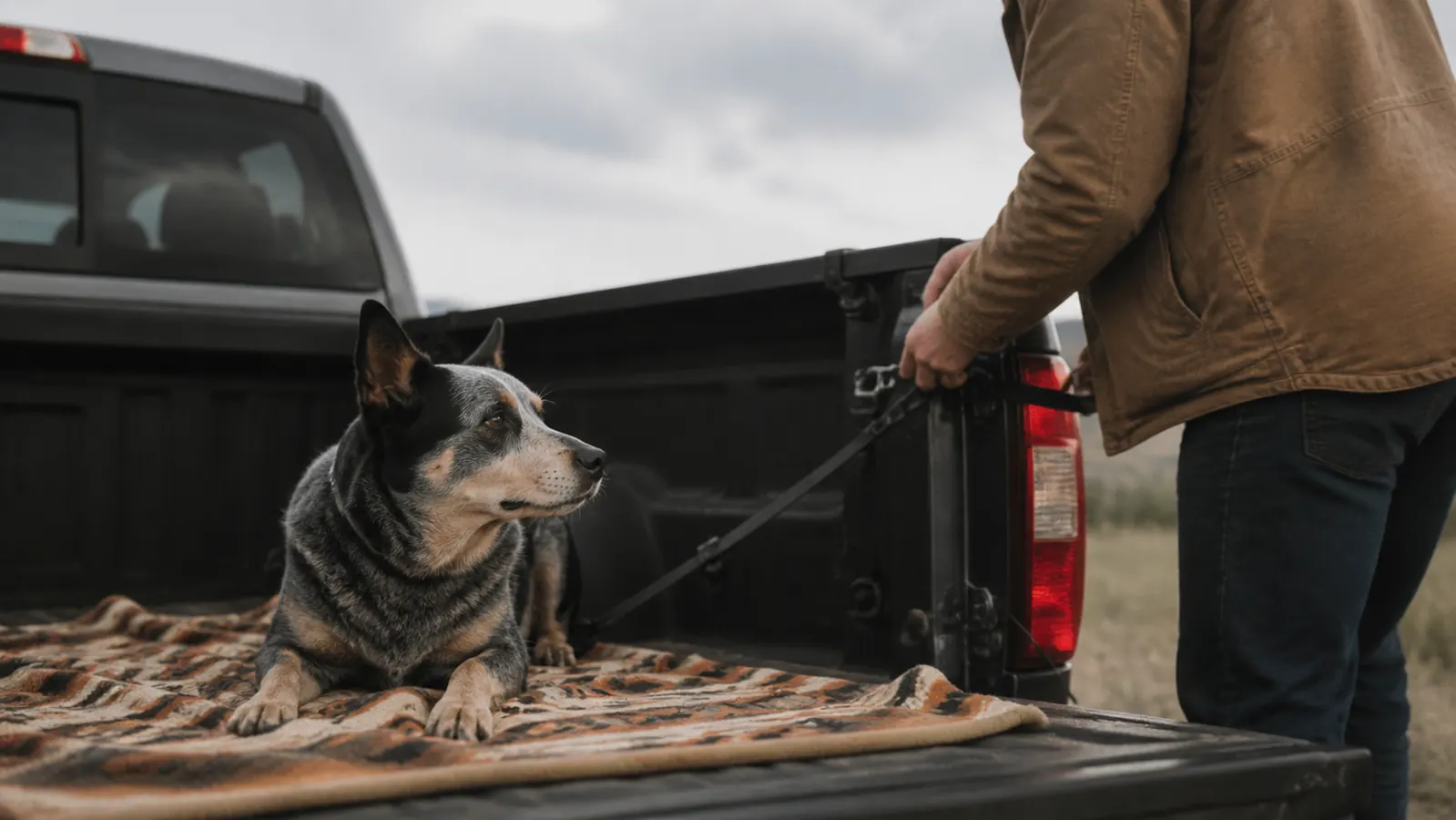
If your dog is going into the bed of a pickup, the tailgate is the natural spot for the ramp. I still use a bed cover, so Boone rides in the cab with me, but I've loaded him in the bed for shorter trips. The same rules apply: level ground, locked ramp, secure the dog with a tie-down if you're using the bed.
For an SUV or a crew cab, the rear door works well. The Pawaboo ramp fits through the opening without a problem, and the lip at the top catches the door sill. Just make sure the ramp doesn't rest on the seat itself, because that can damage the upholstery.
My Final Advice
The biggest mistake I see people make is treating the ramp like a piece of exercise equipment. It's not. It's a tool to help a dog that's getting older or has joint pain. Start slow, use rewards, and don't be afraid to back off if your dog is genuinely scared. With consistent practice, most dogs learn the ramp in a few days.
I've got a lot of gear in my truck, but the Pawaboo ramp earns its spot more than almost anything else. It gets Boone in and out without a struggle, and it saves my back on long trips. If you've been lifting your dog because he can't jump anymore, this is the fix that makes sense.
The last thing I'll say is to check the ramp for wear before long trips. A crack in the frame or a loose hinge isn't worth finding out about at a rest stop in the middle of nowhere. Sixty seconds of looking saves you a lot of trouble later.
Make loading your dog the easy part of the trip
A good ramp pays for itself the first time you don't have to lift a heavy dog into the truck. See the current price on Amazon.
Amazon Check Today's Price on Amazon →