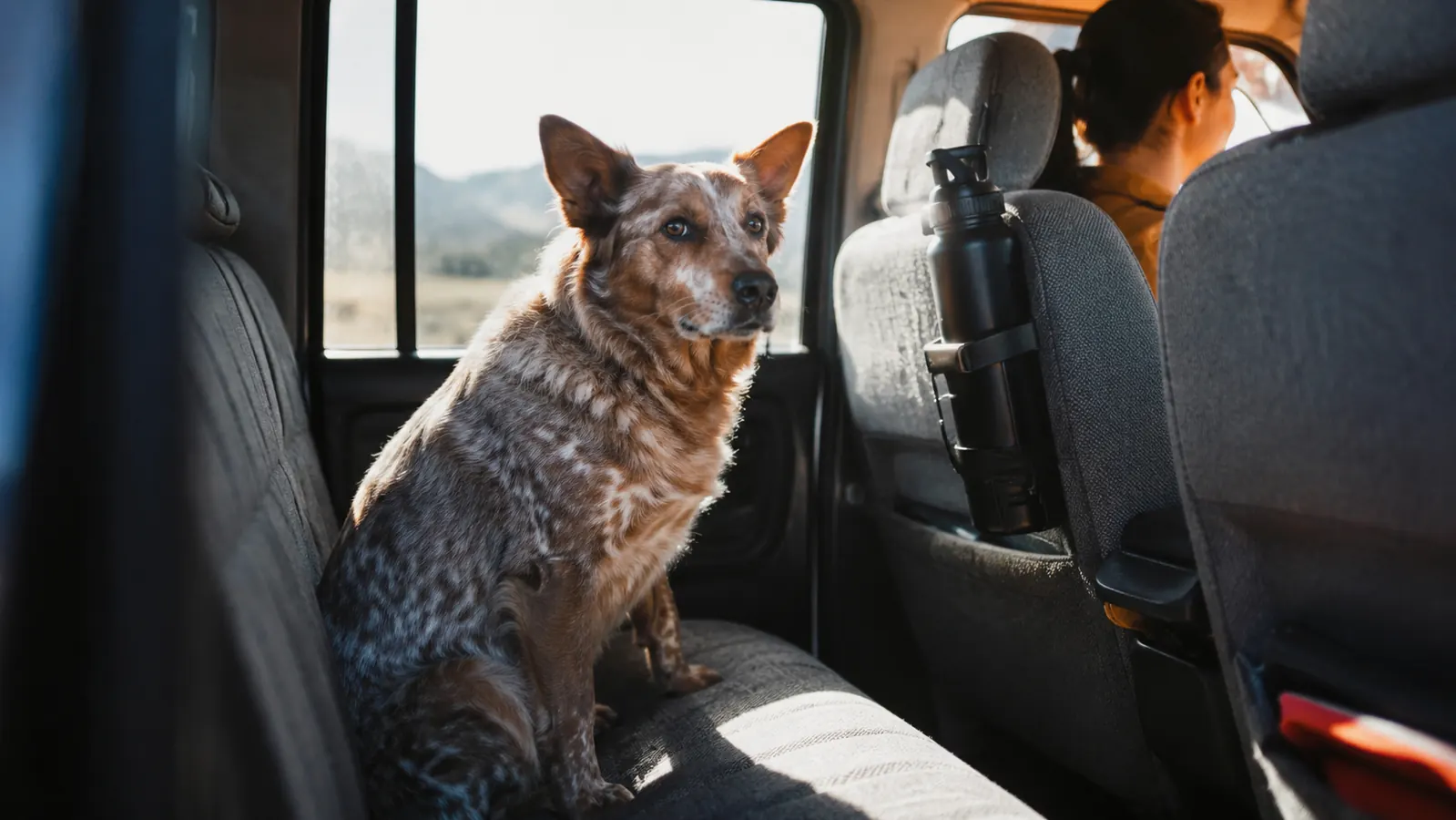
Most people don't think about dog water until the dog is panting in the passenger seat and you are thirty miles from the next exit. I am Roy Tabor. I drive a 2019 Ram 1500 crew cab for a living, mostly the stretch of I-80 between Omaha and Salt Lake, and my co-pilot is Boone, a nine-year-old yellow Lab mix who has logged more miles than most sedans. Keeping him hydrated on the road is not a cute accessory problem. It is a safety problem. A dehydrated dog gets restless, and a restless dog in a moving truck is a distracted driver. This guide is the system I have landed on after years of trial and error, and the centerpiece is the MalsiPree Dog Water Bottle Dispenser.
Before I found a bottle that worked, every long trip went the same way. I would pour water into a collapsible bowl on the seat, Boone would drink half and slosh the rest, and I would spend the next four hours driving on damp cloth trying to ignore the smell. Or I would stop, let him drink from a bowl on the ground, and have to wrestle him back into the cab before some other traveler's dog wandered over. The mess was not the worst part. The worst part was that he was not actually drinking enough, because I did not have a way to offer water without turning the cab into a splash zone. If that sounds familiar, this guide is for you.
The Bottle That Fixed the Splash Zone
MalsiPree's 12 ounce dispenser lets Boone drink from a built-in cup, then locks back up with no drips. I use it on every trip now, and I will show you exactly how.
Amazon Check Today's Price on Amazon →Why Most Road Trip Watering Fails
Most travel bowls are designed for a parked car. They sit flat, they hold water, and they spill the moment the vehicle moves. Even the so-called no-spill bowls only work until the dog bumps them. In a crew cab, that happens within the first mile. Add a hard stop, a pothole on I-80, or a dog that circles before lying down, and you have a soaked seat cover and a dog who learned that water is something that surprises him.
The other failure mode is the bottle that leaks in the bag. I owned a squeeze bottle that dribbled constantly, and a cheap travel bowl that cracked in the cold. Both ended up in a dumpster at a rest stop in Wyoming. The MalsiPree bottle is the first one that survived the actual conditions of life on the road: locked in a door pocket, bounced around for hours, opened and closed a dozen times a day. When something survives that, I trust it.
Step 1: Start With a Bottle That Locks, Not a Bowl That Slides
Every bowl setup I tried before this had the same flaw: it stayed open. A bowl of water sitting on a seat or in a cup holder is a moving object with an expiration date. The first hard stop sends it into the footwell. The MalsiPree bottle solves that by making water a controlled flow instead of an open container.
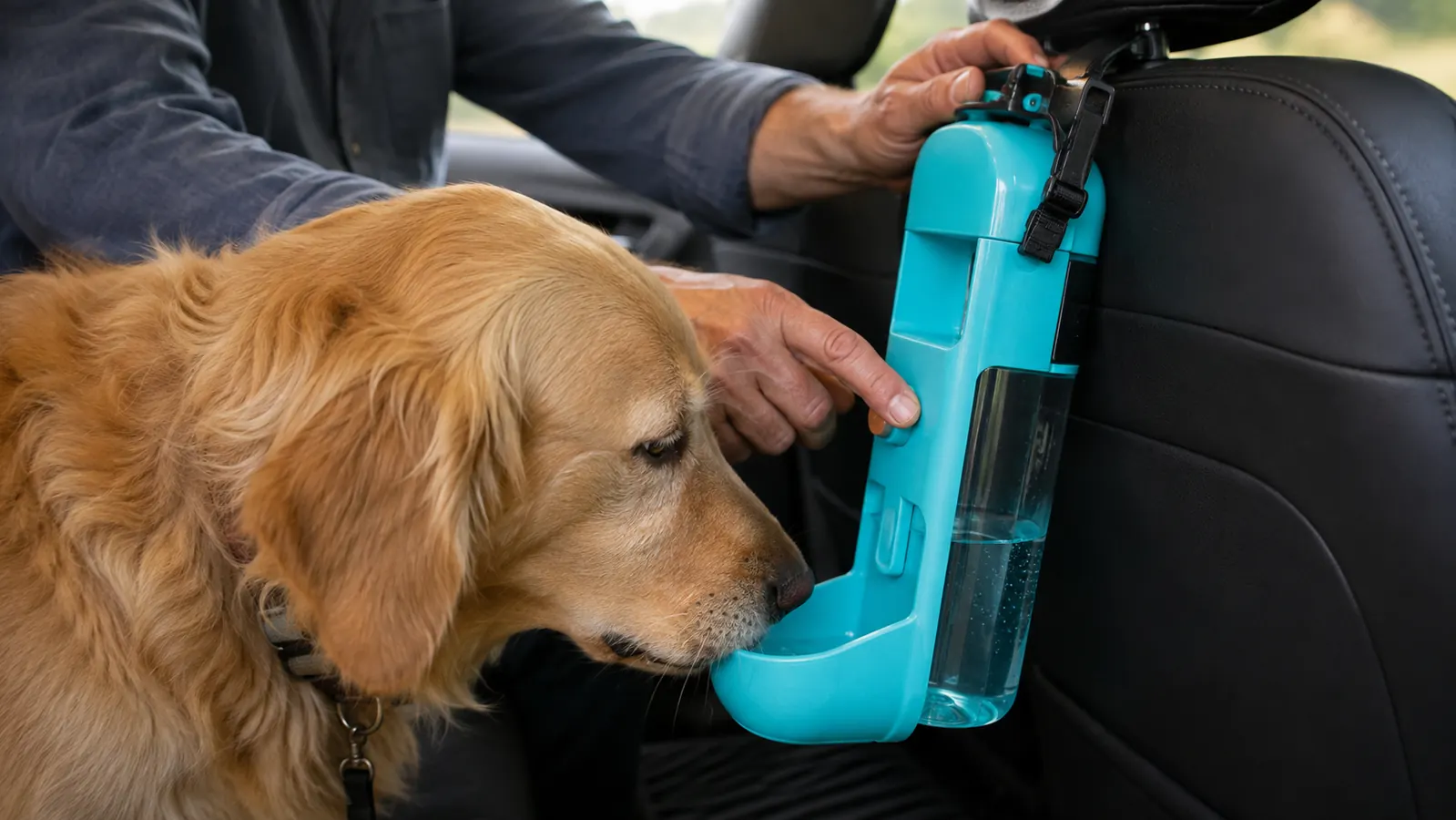
Here is what it does. The bottle caps with a locking lid that has a small cup built into the top. You flip the cup open, squeeze the bottle to fill it, and let Boone drink. When he is done, you tip the cup back into the bottle and lock it. Nothing sits out. Nothing sloshes. The water goes in, he drinks it, the rest goes back.
On paper that sounds like a small detail. In practice it changes the entire rhythm of a road trip. You can offer water at a red light, at a rest area, or while parked at a truck stop without ever taking your eyes off the dog for more than a second. And because the bottle is 12 ounces, it fits in the center console or the door pocket when you are not using it. That means it is always there when the dog needs it, not buried in a bag under a cooler.
Step 2: Offer Water on a Schedule, Not Just When They Ask
Boone will not ask for water. He will sit there, tongue out, panting, and wait for me to think of it. Dogs in a moving vehicle lose water faster than you would expect, and by the time they start lapping at the air, they are already behind. So I run the trip on a timer.
Every two hours, I pull off at an exit or a rest area, do a quick leg stretch, and offer the bottle. The MalsiPree cup is the perfect size for a drink, not a gulp, which means Boone drinks a sensible amount instead of inhaling a liter and then needing a bathroom break ten minutes later. If he is not thirsty, I do not force it. But at least he has the option.
You do not need a fancy schedule. Set a phone alarm, or tie it to your fuel stops. If you stop for gas, that is a water stop. If you stop for coffee, that is a water stop. The bottle makes it quick enough that the stop stays short, and the dog gets a habit just like you do. Over a ten hour day, that is five chances to drink instead of one or two.
Watch for the early signs that your dog is running low. Dry nose, heavy panting after a short stop, or a dog that suddenly loses interest in looking out the window. When I see those, I pull off at the next exit and offer the bottle even if the timer has not gone off. One drink usually turns him right around.
Step 3: Keep the Water Drinkable, Not Ice Cold
Cold water from a cooler feels great for the first five minutes, but dogs do not do well with a huge gulp of ice water on a hot day. It can trigger stomach upset or just make them drink less. I fill the MalsiPree bottle with cool tap water before I leave, not ice water, and keep it in the cab rather than the trunk.
In summer the cab gets hot, so I keep the bottle in the center console or in the passenger footwell out of direct sun. If you are parked for a while, crack a window and keep the bottle shaded. The point is steady access to comfortable water, not a cold shock. I have seen dogs take one gulp of ice water and then refuse the bowl for the rest of the day.
If you are traveling through a climate where the water would freeze overnight, keep the bottle inside your bag. The locking lid keeps it from leaking, so it is safe to pack. In winter I have left it in the cab overnight with no problem, and Boone still gets his two hour drink. The rubber seal has not failed once, which is more than I can say for the other bottles I tried.
Step 4: Clean It Every Night So It's Ready Tomorrow
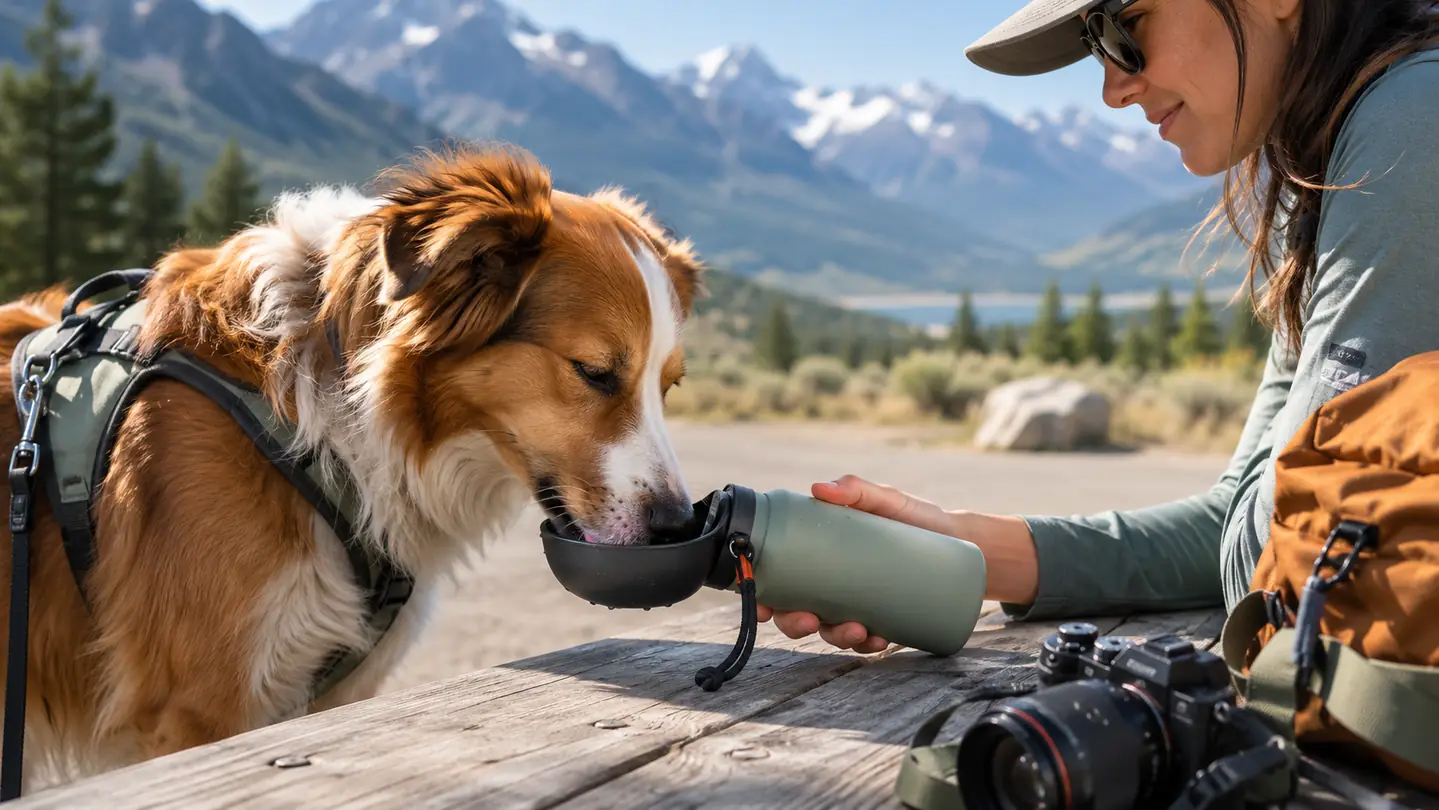
A travel water bottle that you never wash is a science experiment by day three. Dog slobber, dust from the rest area, old water, it all adds up. The MalsiPree bottle comes apart easily, but I will be honest, I do not fully disassemble it every day. I rinse the cup and the mouthpiece with hot water at the hotel or at home, and deep clean it once a week.
The trick is doing it while the trip is fresh. If you wait until you are back home, you will forget, and next trip starts with a bottle that smells like a swamp. Rinse it when you brush your teeth at night. It takes thirty seconds. I keep a bottle brush in my travel bag specifically for this, and it lives in the side pocket with the leash.
If you are camping, you can rinse it with bottled water and a shake. It is not perfect, but it beats nothing. The important part is that the water Boone drinks tomorrow comes out of a bottle that was clean today. That is the whole job.
Step 5: Set Up the Back Seat So the Bottle Is Easy to Use
The bottle works on its own, but it works better when the dog is already settled. Boone rides in the back seat of my crew cab, on a seat cover that I can hose off. The seat cover does double duty: it catches the occasional drip and it gives Boone a non-slip surface so he can brace himself on turns. Without it, he slides into the door on every curve and looks miserable.
Keep the bottle within reach from the front seat. I keep it in the driver door pocket or the center console, cup side up, locked. If you are riding with a passenger, they can handle the bottle and offer it to the dog without unbuckling. If you are alone, pull over at a safe spot and reach back. Do not try to hand a bottle to a dog while driving, no matter how calm the dog is.
Also think about where the dog's head is. If your dog is small, you might need to hold the bottle lower, or offer it from the floor for a minute. Boone is big enough to drink from the back seat while I stand at the door, but a smaller dog might need a step or a moment in the footwell. The bottle is flexible about that because the cup is the whole top. It works on a tall dog and a short dog the same way.
One more thing: the bottle is small enough that Boone does not treat it like a toy. He knows the difference between his water and his chew toy, and the locking lid means it stays a water bottle even when he noses it. That was the problem with every open bowl I tried; it became a splash toy within minutes.
What Else Helps
Beyond the bottle, I carry a few things that make the difference between a good trip and a great one. A cheap plastic liner for the footwell catches the water that still escapes. A small towel over the seat back handles the last of the drips. And I keep a gallon of spare water in the bed of the truck for refills, because rest area sinks are not always drinkable for a dog. None of that matters if the bottle leaks, which is why I stuck with the MalsiPree after trying three other designs. The locking lid has held up for years of daily use, and the cup has not cracked or gone stiff. That is the real test.
I also bring a little collapsible bowl as backup for long stops. When I park for lunch, I pour from the MalsiPree into the bowl so Boone can take a proper drink without me holding the bottle. It is not for the cab, it is for the picnic table. Between the bottle and the backup bowl, I have never had a trip where Boone went thirsty or the truck got wrecked.
In winter, the same gallon of water in the truck bed can freeze solid, so I keep the refill jug in the cab behind the passenger seat. The MalsiPree bottle stays in the door pocket, and I fill it from the jug at each stop. It is one more small routine, but it means Boone always gets water that is the same temperature he is used to at home.
I used to think a water bottle for the dog was a gadget. Now I think it's the difference between a dog that drinks and a dog that just pants.
Roll With a Bottle That Doesn't Fight You
If you drive with a dog, the MalsiPree 12 ounce dispenser is the lowest friction water solution I have found. It locks, it cleans, and it keeps the cab dry. Check today's price on Amazon and see if it earns a permanent spot in your door pocket.
Amazon Check Today's Price on Amazon →