
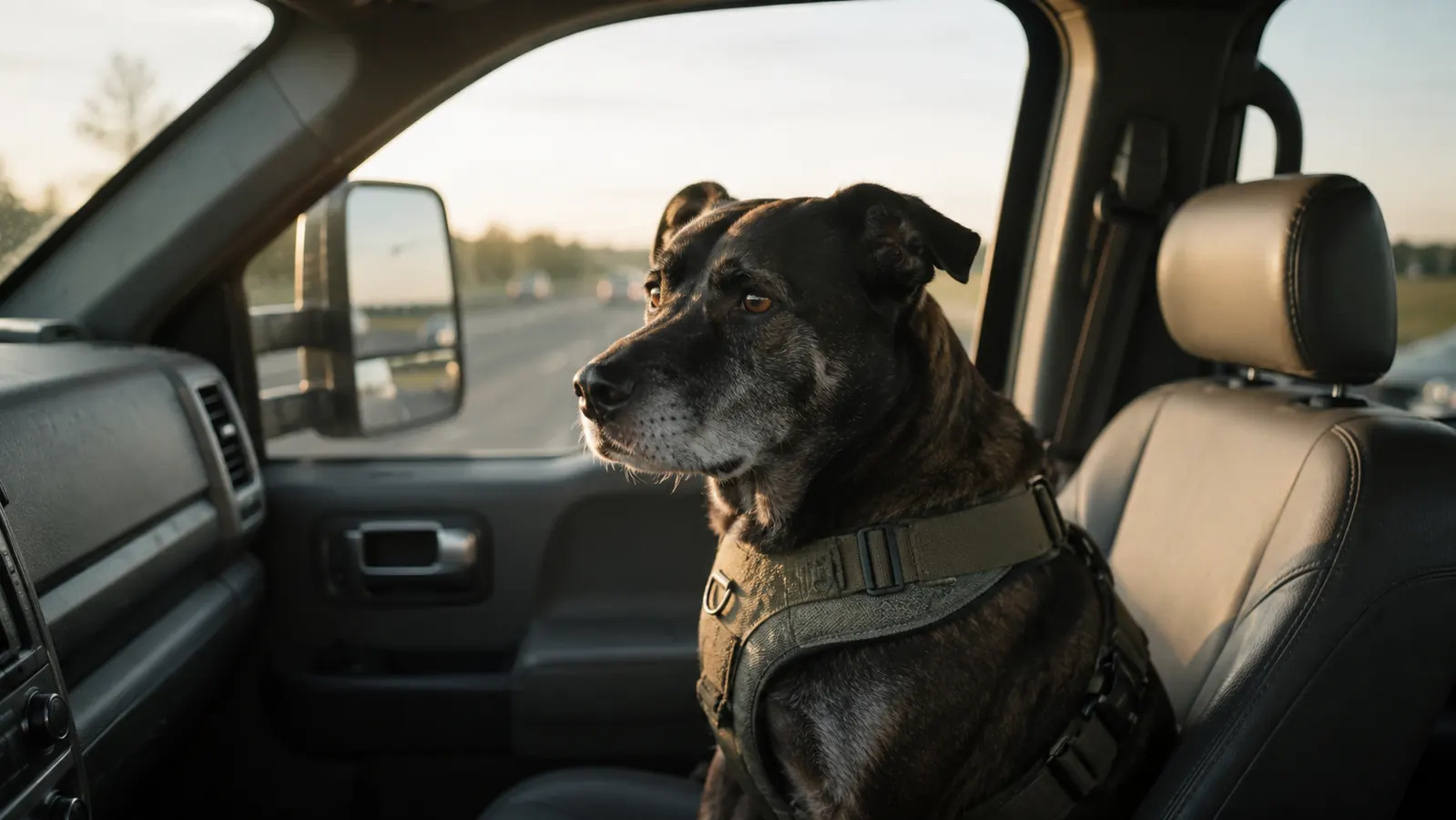
I run a 2019 Ram 1500 crew cab between Omaha and Salt Lake, and my dog Boone has more seat time than most people I know. For the first couple of years he rode with a plain seat belt clip snapped to his collar. It was cheap, it took five seconds to click in, and it kept him out of the front seat while I drove. Then one hard brake near North Platte put him on the floorboards and the collar up under his jaw, and I spent the next week reading crash tests instead of listening to the radio. That is how the Kurgo Tru-Fit harness ended up in the back seat, and this is what a season of real miles taught me about both ways to keep a dog safe in a truck.
Short answer: if your dog rides with you more than once a month, buy the crash-tested harness. The seat belt clip is better than nothing, but it is not a crash restraint. It is a parking brake for your dog, not a seat belt. The rest of this comes from actual driving, not a spec sheet.
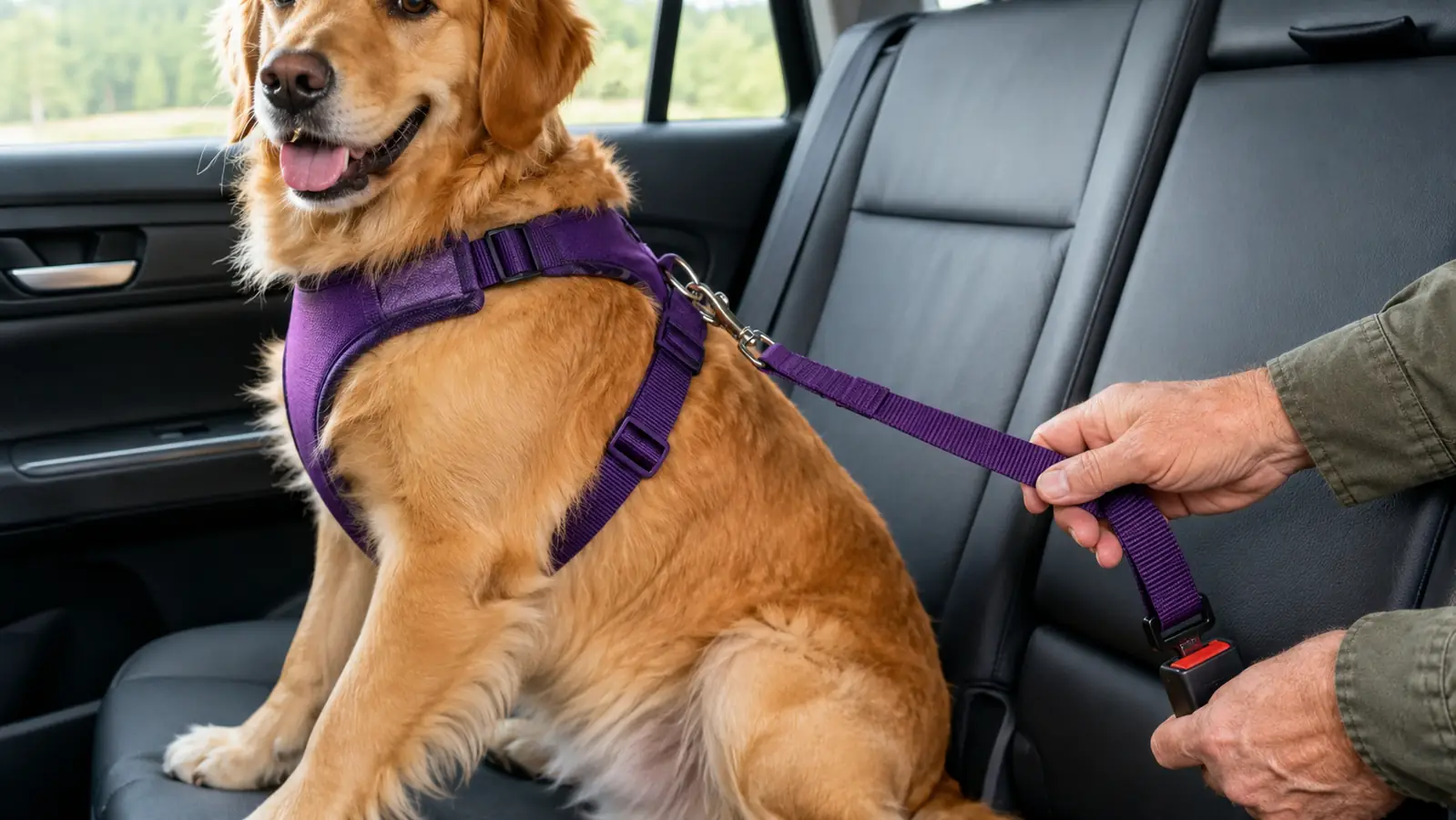
The two products do two different jobs. The Kurgo Tru-Fit is a padded harness with steel hardware and a tether that clips into the seat belt latch. It is crash-tested to Federal Motor Vehicle Safety Standard 213, the same family of standards used for child restraints, and the idea is to spread the force of a stop across the chest and shoulders. The seat belt clip is a short nylon strap with a latch on one end and a clip on the other. It hooks to the dog's collar and then to the seat belt. One is built for a collision. The other is built to stop a dog from wandering around the cab.
| Kurgo Tru-Fit Harness | Seat Belt Clip | |
|---|---|---|
| Crash protection | Tested to Federal Motor Vehicle Safety Standard 213 | No crash standard; the clip is only as strong as the collar |
| Where the force goes in a hard stop | Spread across the chest and shoulders | Straight into the collar and the neck |
| Price | Higher one-time cost for crash-rated hardware | A small fraction of the cost, with no crash rating |
| Fit | Sized to the dog, takes a minute to adjust | Universal, fits any dog in any vehicle |
| Comfort on a long drive | Padded chest plate, no collar pull on turns | Nothing on the dog, but the collar yanks on every curve |
| Setup time | Put it on, adjust, then click the tether in | Click to the collar, click to the seat belt, done |
| Keeps the dog in the back seat | Holds a 74 lb dog in a hard stop | Holds a calm dog, not a determined one |
Where the Kurgo Tru-Fit Wins
Crash protection is the whole ballgame, and there is no contest. The seat belt clip only holds where it attaches, and it attaches to the collar. In a hard stop at highway speed a 74 pound dog becomes roughly a ton of force, and every pound of it goes into the neck. The collar turns into a tow strap. The Tru-Fit spreads that same force across the chest and shoulders, which is where a dog's body is built to take it. That is the difference between a restraint and a leash that happens to be clipped to the truck.
The win I did not expect was how much calmer Boone is in the truck. The padded chest plate sits on his breastbone, not his throat, and the tether runs from the back of the harness down the seat instead of pulling at his neck on every curve. He settles into the corner of the back seat and sleeps for hours. With the collar clip he spent half of every drive leaning against the buckle, trying to find a position that did not pull. A settled dog is a safer dog, because a dog that fights a restraint will find a way out of it.
It also keeps him where he belongs. The harness has two attachment points, front and back, and when the tether is on the back clip he can stand up, turn around, and lie down, but he cannot climb over the console into the front seat. I stop for fuel and a coffee and I do not have to worry about him greeting a person at the pump before I get the door open. That alone is worth something on a 12 hour day.
Where the Seat Belt Clip Wins
Now the honest part, because a comparison that only praises one side is not a comparison. The seat belt clip wins on price and simplicity by a wide margin. It costs a small fraction of a crash-tested harness, it fits any dog from a terrier to a mastiff, it works in any vehicle, and you can click it in before the engine warms up. If your dog goes to the vet twice a year and nowhere else, the clip is a reasonable choice. It keeps the dog out of your lap, and that is a real job.
The clip also wins when a harness does not fit. A harness in the wrong size does nothing in a collision, and a universal clip at least keeps the dog in the back seat. It works in a borrowed truck, a rental car, a friend's SUV, no adjustment, no sizing chart. If the dog is still growing or you are between sizes, the clip is the flexible stopgap. Keep one in the glove box even after you buy the harness. I do.
What the clip costs you is the thing you cannot see. The plastic hardware is not rated for crash loads, and the collar is the weak link in the whole chain. After a hard stop, the clip can crack and the collar can stretch, and neither one will hold the same way again. You can replace the clip and call it even. You cannot replace a dog's neck. That is the trade, and you should make it with your eyes open.
In a hard stop, a 74 pound dog becomes roughly a ton of force, and a collar puts every pound of it into the neck.
The harness that holds in a hard stop
The Kurgo Tru-Fit is the harness Boone rides with on every run. It crash-tests to FMVSS 213 and it keeps a restless dog in the back seat. Check today's price on Amazon.
Amazon Check Today's Price on Amazon →How I Tested Them
I did not test these in a laboratory, because I do not have one. I tested them the way most people use them. Boone rode with the seat belt clip for about eight months of trips, everything from the fifteen minute drive to the feed store to a full run to Salt Lake. Then he rode with the Kurgo Tru-Fit for a similar stretch. Same truck, same dog, same roads, and I paid attention to three things: whether he could move around safely, how he behaved, and what each setup did in the sudden stops that happen whether you want them or not.
For comfort I watched him on long days. With the clip, he shifted constantly, stood up, sat down, leaned, and never really settled. With the harness he curled up on the back seat and stayed there. I also checked his neck and chest at every fuel stop. The collar clip left the fur under his collar roughed up on multi day runs. The harness left his chest clean, no rubs, no hot spots.
For real-world safety I watched him in the quick stops you get on the interstate when traffic stacks up. With the clip, a hard stop lifted him off the seat and put the collar tight under his jaw. With the harness, the same stop held him in the seat and the padding took the load across his chest. That is the moment that made up my mind, and it is the reason this article has a recommendation instead of a shrug.
What the Crash Standard Actually Means
Worth explaining what that crash test actually means, because I had to look it up myself. Federal Motor Vehicle Safety Standard 213 is the standard for child restraint systems. When a pet harness says it is tested to FMVSS 213, it means the harness and tether were tested on a sled that simulates a 30 mile per hour crash, and the restraint kept the test dog from being thrown. That is the closest thing the industry has to a real safety rating. The seat belt clip has no equivalent. No standard, no sled test, just a plastic latch and a promise.
I am not a test engineer, and I am not going to pretend otherwise. What I know is this: in the one real hard stop I had with the collar clip, the dog ended up on the floorboards. In the same kind of stop with the Kurgo, he stayed in the seat. The harness has a standard behind it, and the clip does not. On a road where semi trucks stack up at 70 miles an hour, I would rather bet on the one with a test behind it.
Getting the Fit Right Matters More Than You Think
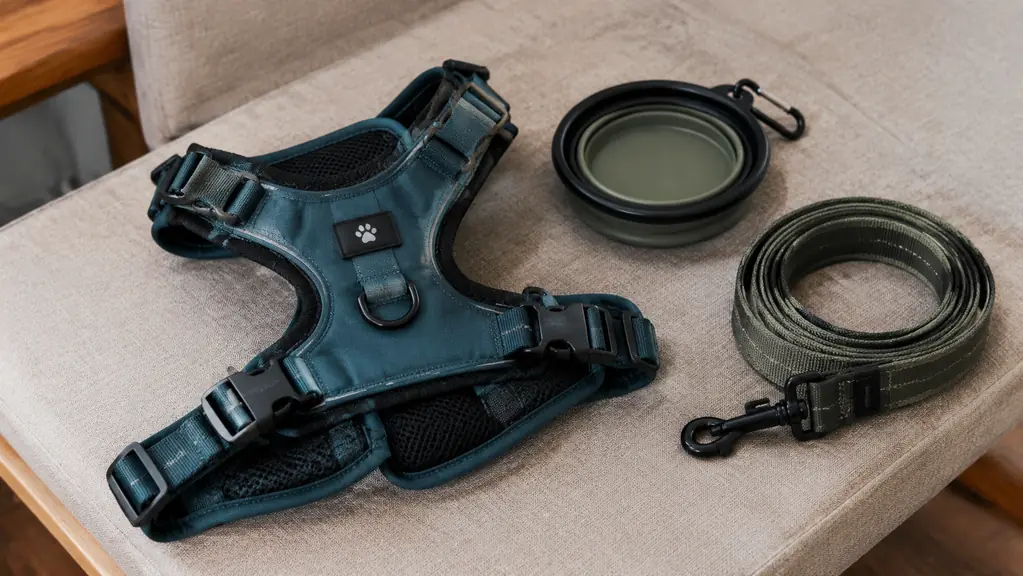
The one catch with any harness is that it has to fit, and most people get this wrong the first time. The Kurgo Tru-Fit adjusts at the chest and the belly, and the rule of thumb is two fingers under each strap. Too loose and the dog can back out of it in a panic. Too tight and it rubs. I adjusted Boone's the first morning in about ten minutes, and I checked it again after the first long day because harnesses stretch and settle. This is not hard, but it is a step a collar clip does not have.
The sizing chart does the heavy lifting if you measure instead of guessing. Measure the widest part of the chest, just behind the front legs, and match it to the chart before you order. If you are between sizes, size up and cinch it down, because a harness that is too small under the armpit will chafe on day one. That is the most common complaint I see in reviews, and it is almost always a sizing problem, not a harness problem.
Who Should Buy Which
Buy the Kurgo Tru-Fit if your dog rides with you every day, on long trips, or on roads where you actually reach highway speed. Buy it if your dog is big enough to hurt you or itself in a sudden stop. Buy it if you have ever glanced in the rearview mirror and seen the dog halfway into the front seat. Boone is 74 pounds of muscle and stubborn, and I would not go back to a collar clip with him for anything.
Buy the seat belt clip if the dog rides rarely, if you need something for a borrowed car, or if you just want the dog out of the front seat on the way to the park. It is the right tool for light duty, and there is no shame in that. But if the dog rides enough that you are reading an article about harnesses, you are exactly the person who should spend the money on the crash-tested one. The clip is a stopgap. The harness is the answer.
And if you are still on the fence, think about it in the simplest terms. You are not buying a harness. You are buying the difference between watching your dog ride out a rough patch of road and watching your dog get hurt in the same patch. I know which one I sleep better with.
The Bottom Line
The bottom line is simple. The Kurgo Tru-Fit is the better way to keep a dog safe in a car, and the gap between the two is not small. The seat belt clip has a place, and I still keep one in the glove box for a day I have to drive a borrowed truck. But on the road that matters, the one Boone rides in every day, he wears the harness.
If you drive a dog more than once a month, stop trusting a collar to do a harness's job. I watched a decade of road miles teach me that lesson, and one hard brake near North Platte made it stick. Buy the crash-tested harness once and you will not think about it again, and neither will your dog.
Ride safer, every mile
The same Kurgo Tru-Fit harness Boone wears on I-80. Check today's price on Amazon to see it.
Amazon Check Today's Price on Amazon →